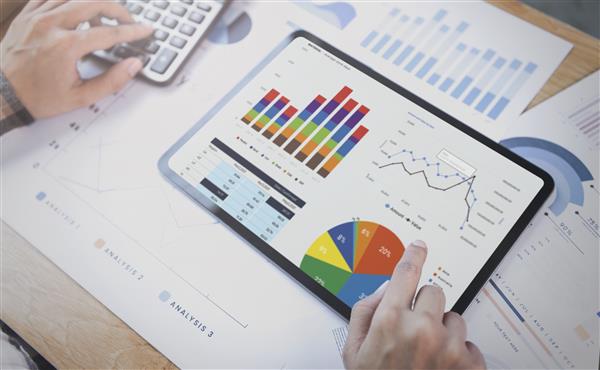
In today’s highly competitive and data-driven world, businesses no longer rely solely on intuition or past experience to make decisions. Instead, they depend heavily on software and analytics to gain accurate insights, predict trends, and optimize operations. Software tools combined with advanced data analytics have transformed how organizations plan strategies, understand customers, and manage performance.
Understanding Software & Analytics
Software refers to computer programs that perform specific tasks such as accounting, customer management, inventory tracking, and communication. Analytics, on the other hand, involves examining large sets of data to uncover patterns, trends, and useful insights. When these two work together, organizations gain the power to transform raw data into meaningful business intelligence.
Modern businesses generate vast amounts of data from websites, mobile apps, customer interactions, social media, and internal systems. Without analytics software, this data would remain unused and overwhelming. Analytics tools process this information, helping businesses understand what is happening, why it is happening, and what is likely to happen next.
Improving Strategic Decision-Making
One of the most powerful contributions of software and analytics is in strategic decision-making. Business intelligence (BI) software provides real-time dashboards, reports, and visualizations that help managers track performance across departments. Sales growth, marketing effectiveness, employee productivity, and customer satisfaction can all be measured accurately.
For example, instead of guessing which product sells best, a company can use analytics to identify top-performing products, seasonal demand patterns, and regional buying behavior. This enables leaders to make confident decisions supported by real evidence rather than assumptions.
Enhancing Customer Understanding
Customer-focused businesses rely heavily on analytics to understand behavior, preferences, and needs. Customer Relationship Management (CRM) software collects and organizes customer data such as purchase history, feedback, app usage, and support interactions.
With analytics, companies can segment customers based on age, interests, buying habits, and engagement levels. This allows businesses to deliver personalized marketing messages, targeted offers, and customized services. As a result, customer satisfaction increases, and brand loyalty strengthens.
Operational Efficiency and Cost Reduction
Software and analytics also improve operational efficiency. Enterprise Resource Planning (ERP) systems integrate finance, human resources, supply chain, and production into one centralized platform. Analytics helps monitor inventory levels, forecast demand, and identify areas where costs can be reduced.
For example, predictive analytics can estimate future demand based on historical data. This prevents overproduction or stock shortages, saving money and improving delivery times. Analytics can also detect inefficiencies in workflows, allowing businesses to streamline processes and boost productivity.
Risk Management and Fraud Detection
Another major benefit of software and analytics is risk management. Financial institutions use advanced analytics to detect unusual transactions and prevent fraud. Insurance companies assess risk using customer data and predictive models. Businesses analyze market trends to avoid investment risks.
By identifying potential threats early, organizations can take preventive action instead of reacting after damage occurs. This leads to better financial stability and stronger business protection.
Real-Time Decision Support
In the past, data analysis often took weeks or months. Today, real-time analytics software provides instant insights. Managers can monitor live dashboards showing sales performance, website traffic, employee activity, and system health.
This real-time visibility allows businesses to respond quickly to changing market conditions. If a campaign underperforms or a system fails, corrective action can be taken immediately instead of waiting for end-of-month reports.
Supporting Data-Driven Culture
Software and analytics also shape company culture. Organizations that embrace data-driven decision-making encourage employees to use facts and numbers rather than personal opinions. This leads to transparency, accountability, and continuous improvement.
Employees at all levels—from managers to frontline staff—can use analytics dashboards to understand goals, measure performance, and identify improvement opportunities. This shared access to data promotes teamwork and alignment with business objectives.
Challenges and Limitations
Despite its advantages, software and analytics face several challenges. Data quality is a major concern. Inaccurate or incomplete data can lead to misleading insights. Data security is another critical issue, as sensitive business and customer information must be protected from cyber threats.
Additionally, advanced analytics tools require skilled professionals such as data analysts and engineers. Smaller businesses may struggle with implementation costs and technical complexity.
The Future of Software & Analytics
The future of software and analytics lies in artificial intelligence, automation, and machine learning. Predictive and prescriptive analytics will not only forecast outcomes but also suggest the best actions. Cloud-based platforms will make powerful analytics accessible to businesses of all sizes.
Conclusion
Software and analytics have become the backbone of modern business decision-making. They improve strategy, customer understanding, efficiency, and risk management. While challenges exist, the benefits far outweigh the limitations. Organizations that successfully adopt analytics-driven software gain a powerful competitive advantage in today’s digital economy.